
Archive
More than thirty-five years of First Things articles at your fingertips
Articles
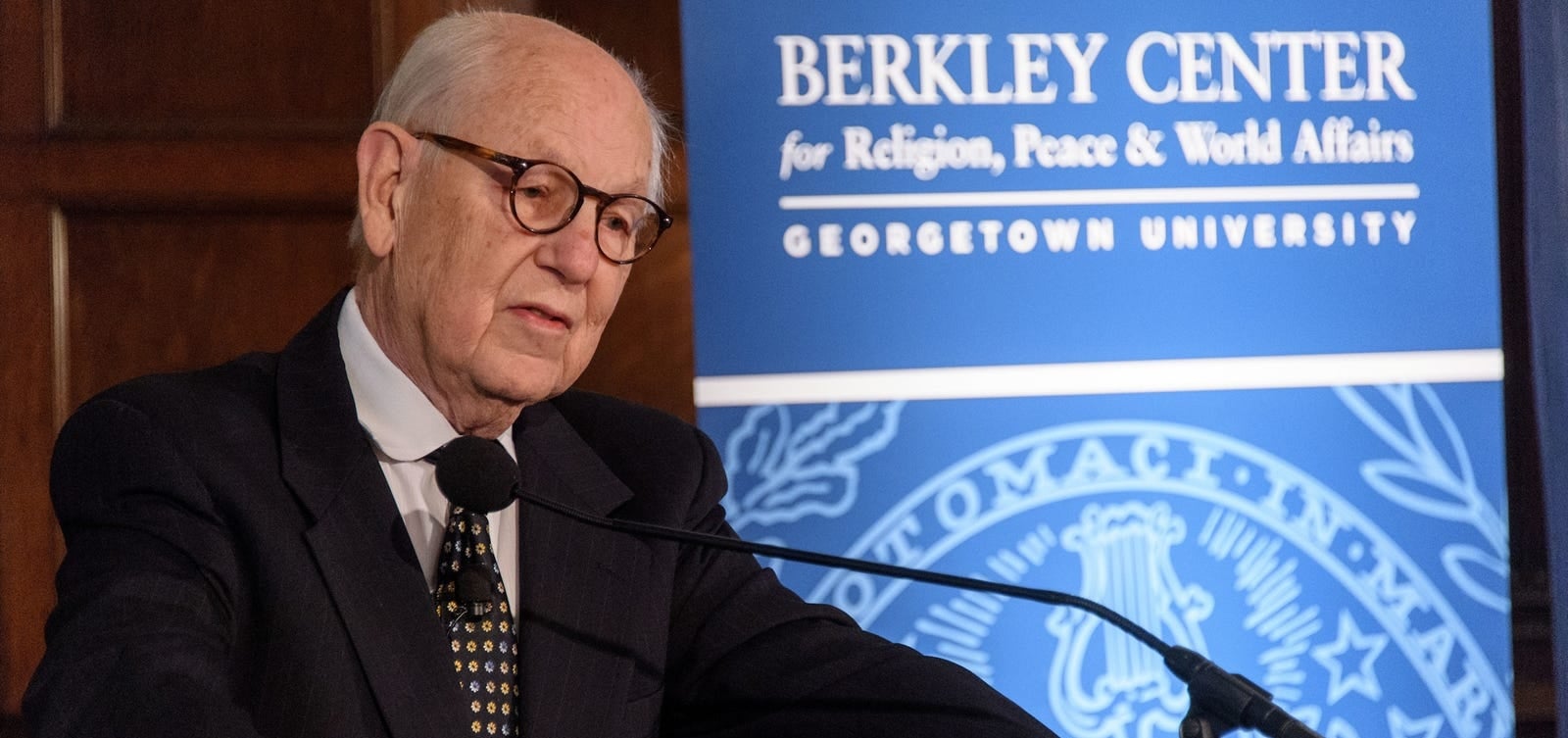
In Memoriam: Robert Louis Wilken
Robert Louis Wilken (1936–2026) passed away on Saturday, June 6, at age eighty-nine. A former chairman of the board of the Institute on Religion and Public Life and lifelong...
Religiously Texan
Rough Country: How Texas Became America’s Most Powerful Bible-Belt State? by robert wuthnow? princeton, 664 pages, $39.50 I am a Texan. We Texans believe you can’t understand us unless you...
Go With God
The Christian religion,” wrote Robert Louis Wilken, “is inescapably ritualistic (one is received into the Church by a solemn washing with water), uncompromisingly moral (‘be ye perfect as your...
The Kingdoms of the World
American Babylon: Notes of a Christian Exile by Richard John Neuhaus Basic, 265 pages, $26.95 Near the end of American Babylon comes a paragraph that reads: “The truth about...

The Virtues of Alasdair MacIntyre
Few dispute that Alasdair MacIntyre is one of the most important philosophers of our time. That reputation, however, does him little good. It is as though, quite apart from...
In a Time of War: An Exchange
In their editorial “In a Time of War” (December 2001), the Editors of First Things declare: “One matter that has been muddied in recent decades should now be clarified:...
Remembering John Howard Yoder
The 1978 Festival Quarterly featured a profile of John Howard Yoder. The interviewer asked John if he enjoyed his significance. “Oh, time has passed me by,” he responded. (The...
Preaching As Though We Had Enemies
I am just postmodern enough not to trust “postmodern” as a description of our times, for it privileges the practices and intellectual formations of modernity. Calling this a postmodern...
A Communitarian Lament
The Good Society by robert n. bellah, richard madsen, william m. sullivan, ann swidler, and stephen m. tipton knopf, 333 pages, $25 The Good Society is a sequel to...
Honor in the University
We live in a time when ethics has become big business: medical schools hire medical ethicists, business schools hire business ethicists. Congress has an ethics committee, and schools and...
The Importance of Being Catholic: A Protestant View
(Editor’s Note: This paper was originally given as the tenth Paul Wattson Lecture at the University of San Francisco, sponsored by the Franciscan Society of the Atonement.) I was...
