
His Eminence, Mario Cardinal Grech
General Secretary
Synod of Bishops
00120 Vatican City
Your Eminence:
The “National Synthesis of the People of God in the United States of America for the Diocesan Phase of the 2021-2023 Synod,” prepared by the United States Conference of Catholic Bishops, is a very disappointing document, not least because it largely focuses on what the 1 percent of U.S. Catholics who participated in these “synodal” discussions find wrong with the Church—a roster of grievances that, unsurprisingly, reflects both the progressive Catholic agenda in American Catholicism and certain dominant (if false) impressions about our local Church in Rome. But rather than amplify others’ critiques of the “National Synthesis,” I would like to share with the General Secretariat of the Synod of Bishops some good news about U.S. Catholicism: news that might well be of interest to the universal Church as it considers its evangelical future.
Catholic schools in America are a treasure the country is beginning to recognize as such. When America’s state-run schools were failing students and parents during pandemic lockdowns, Catholic elementary schools stepped into the breach, providing on-site and online instruction that government schools were incapable of mounting—thanks in large part to self-interested, unionized teachers. By contrast, Catholic schoolteachers tend to think vocationally, and that made a huge difference. Moreover, Catholic schools in our inner-urban areas, like the new, state-of-the-art Mother Mary Lange School in Baltimore, are the most effective anti-poverty program the U.S. Church has ever devised—and they serve students from many religious backgrounds.
The U.S. Church is experiencing something of a Golden Age in Catholic campus ministry. This encouraging fact of twenty-first-century U.S. Catholic life has many expressions. There are vibrant ministries on major state university campuses; the most notable of these, at Texas A&M University, has become a rich source of vocations to the priesthood and religious life while preparing many Catholic couples for marriage and family life. The Thomistic Institute, initiated by the Dominican House of Studies in Washington, is bringing serious Catholic content to eighty-three college and university campuses this academic year; another Dominican initiative, “Aquinas 101,” has 90,000 online subscribers, and its imaginative expositions of Catholic philosophy and theology have gotten over five million views on YouTube. The Fellowship of Catholic University Students (FOCUS), a peer-to-peer evangelization effort, is now present and actively serving on 195 U.S. campuses and eight international campuses.
Catholic seminaries have been thoroughly reformed. While vocations to the priesthood are down over the past decade—perhaps reflecting the constant criticism of priests from Rome—American seminaries are in their best shape in decades, and in all aspects of priestly formation: personal, spiritual, intellectual, and pastoral.
Catholics constitute a core constituency of the vibrant American pro-life movement. Pope Francis has spoken frequently about the dangers of a “throwaway culture.” U.S. Catholics are doing something about challenging that, at both ends of the life spectrum.
Vocations to consecrated life in the United States are increasing where religious institutes embrace the gospel in full and live a distinctive manner of life. Examples include the St. Joseph Province of the Order of Preachers, the Dominican Sisters of St. Cecilia Congregation, the Sisters of Life, and the Religious Sisters of Mercy of Alma, Michigan. As in other sectors of the world Church, Catholic Lite is a failure in fostering American vocations to religious life, while “all-in Catholicism” attracts some of our best young people.
Younger Catholic scholars are leading a renaissance of Catholic intellectual life. The most impressive scholarship in U.S. Catholicism today is being done by men and women who have transcended the liberal/conservative dichotomies of the immediate post-Vatican II period, who have embraced the Council’s teaching as authoritatively interpreted by John Paul II and Benedict XVI, and who are engaging a disturbed culture in order to convert it. Theirs is the future, not the warmed-over Catholic Lite that has returned to several pontifical universities in Rome.
Catholic parishes are livelier in the United States than in virtually any other developed country. These parishes have their challenges, to be sure, but they remain the institutional bedrock of American Catholic life and are engaged in a variety of innovative pastoral programs that seek to engage the marginalized and disaffected—often aided by dynamic Catholic associations like the Knights of Columbus, another jewel in the U.S. Catholic crown, and by the creative catechetical materials developed by the Augustine Institute and Word on Fire.
I hope these brief notes help fill out the portrait of U.S. Catholicism you have been sent by the bishops’ conference. They tell a story the entire world Church needs to hear.
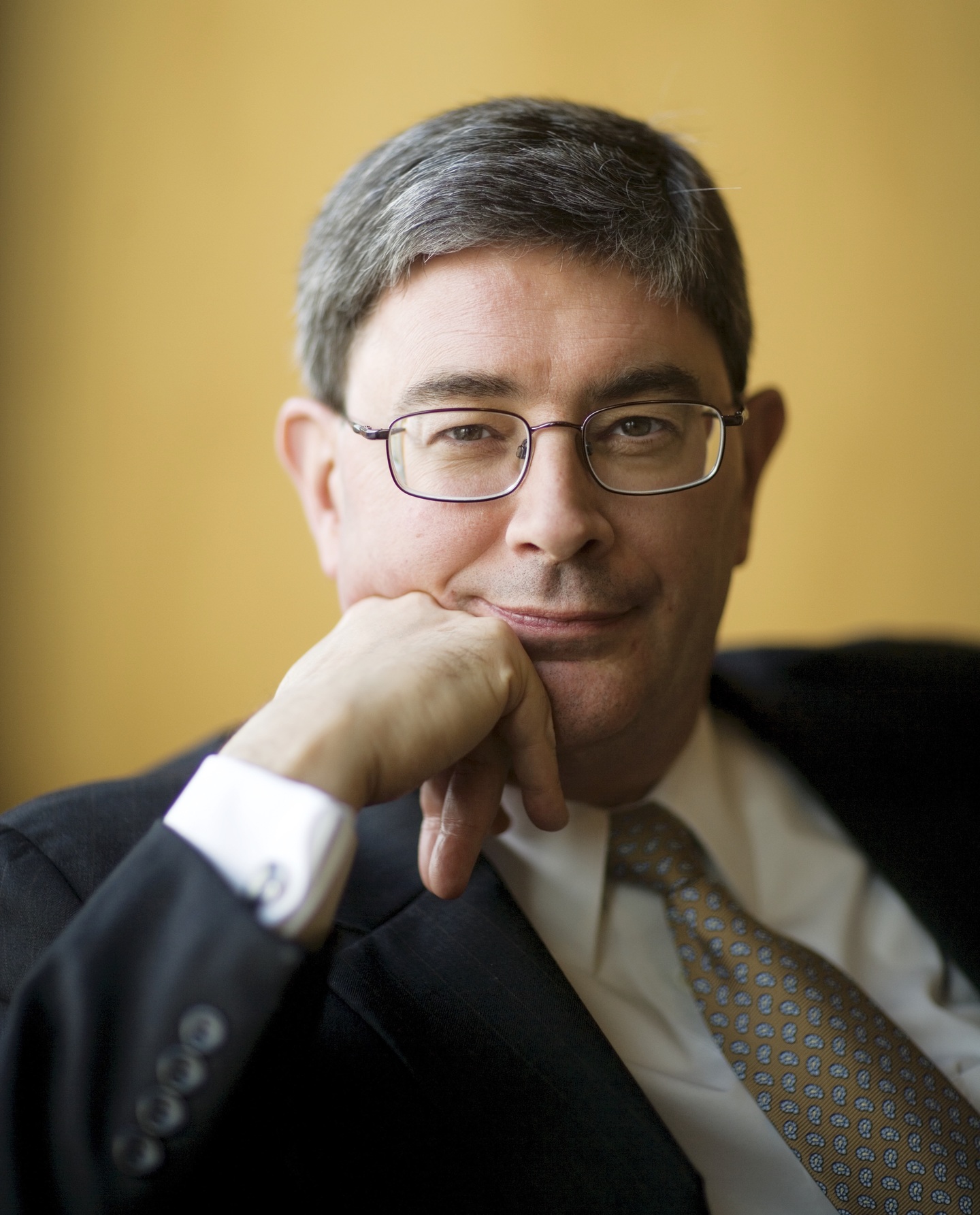
George Weigel is Distinguished Senior Fellow of Washington, D.C.’s Ethics and Public Policy Center, where he holds the William E. Simon Chair in Catholic Studies.
First Things depends on its subscribers and supporters. Join the conversation and make a contribution today.
Click here to make a donation.
Click here to subscribe to First Things.
Dear Reader,
Can I be direct with you?
War abroad. Socialists on the rise. AI upending human life. Endless uproar online. The modern attention economy doesn’t want readers — it wants users enslaved to the tyranny of the present.
First Things is the antidote: literary excellence, timeless truths, and a fixed point of reference in a culture that has lost its bearings.
But we can’t do it without readers like you.
Our goal: Raise $150,000 by November 1 to sustain First Things in the year ahead.
Your gift anchors readers in the permanent things.
Make your Fall Campaign gift now using the button below.
If you have any questions or would like more information, please contact Giovanni Del Piero, Director of the Editor’s Circle, at gdelpiero@firstthings.com or 212-627-1985.


YOU MIGHT ALSO LIKE
A Woman’s East of Eden
Zoe Kazan’s seven-part Netflix adaptation of John Steinbeck’s East of Eden brings a woman’s sensibility to a…
A Culture of Parricide
I learned a new word the other day: déploration. It’s the French, directly from the Latin, for “lament.”…
The Chariot Burials
Wheeling through the clotted earth, / Bronze, bone, and leather clumped in clay...
