SUBSCRIBER LOGIN

Search
First Things

RSS

About


» Articles


Archives


« Previous  |Home|  Next »         

Wednesday, January 16, 2013, 5:50 AM

Every unhappy family is unhappy in its own way, unless the family consists of a morally depraved patriarch and three highly differentiated siblings who, after years out of contact with each other, convene at the family home for a slowly escalating mess made inevitable by their respective and collective dysfunctions, in which case that family is unhappy in the same way as the Karamazovs.

If the same family is subjected to a criminal prosecution after being set up by a conniving quasi-sibling, if the brothers keep trying to mooch money off the family, and if the eldest brother is brash, the middle one smart, and the youngest one saintly, then we have to consider the possibility that this family actually is the Karamazovs, even if they call themselves the Bluths and they appear in an early 2000s Fox sitcom and not a nineteenth-century Russian novel. In which case Mitch Hurwitz (who has a degree in theology from Georgetown) is Dostoevsky. That’s probably the most farfetched parallel in this comparison. The rest are uncanny.

Once you realize that Annyong is Smerdyakov, everything else falls into place. [If I need to declare a spoiler alert for a show that has been off the air for six years and a novel published in the 19th century, then for courtesy’s sake, here it is.] He exists at the fringes of a family full of awful people, sort of a member and sort of not. No one suspects him of being the one-man conspiracy behind the set-up that brings the family down, partly because no one is quite sure it was a set-up at all, since the criminal charge against the family is just the sort of thing they would have done, whether they actually committed this particular crime or not. Everyone thinks he’s a simpleton, which also deflects suspicion. And remember that “Smerdyakov” is not a surname so much as a nickname meaning “Smelly,” so in both cases our villain’s name is a bad joke.

“I didn’t kill him, alright? And don’t edit this for your broadcast so it looks like I’m screaming, ‘I killed Earl Milford!’”

Kitty is Katya, the woman who nurtures a grudge against the family despite (or because of) her romantic interest in two of its members, and who has in her possession evidence that would clinch the prosecution’s case if she chose to reveal it, which she may or may not do.

Lucille Austero is Lise, a woman with a medical problem that limits her mobility and who starts off making eyes at the youngest son, then successfully romances him, then reverses herself and decides she wants to do whatever she can to hurt the family.

Tobias is Rakitin, the man who manages to stay involved in everyone’s affairs despite the fact that no one likes or respects him, whose plan to enter a more romantic profession (acting/journalism) is universally regarded as both unrealistic and annoying, and whose eager embrace of fashionable ideas (self-esteem and herbal medicine/socialism and materialism) makes him look even more foolish than he otherwise would.

Uncle Oscar is Father Zosima, an unworldly man of great gentleness and inner peace who is more of a father to the youngest son than the family patriarch is. Phoenix is Moscow, where Michael/Ivan keeps trying to escape to. And Fyodor Pavlovich’s taverns are his Cornballer. Some of these parallels are less critically fruitful than others.

G.O.B. is Dmitry. He’s a slave to his impulses. He’s the angriest Bluth and also the soppiest, when he gets sentimental. He lives off handouts and is always scheming to get more free money, which he feels he is entitled to morally if not legally. His lack of self-awareness frequently crosses the line into outright delusion. (If you don’t remember Dmitry as especially delusional, think of his scramble to obtain three thousand rubles in the hours leading up to his father’s murder. It was stupid of him to ask Mrs. Khokhlakov to lend it to him, for example, but “he had suddenly become totally convinced that she would not refuse him.” As the narrator says, “In spite of all his vices, Dmitry was very naive.”) G.O.B. even comes close to killing himself out of shame, in the season 2 episode “Sad Sack.”

Michael is Ivan. He is the smartest and most self-aware Bluth, a decidedly mixed blessing considering that it makes him the only one able to grasp just how awful everyone is. Most people think of Michael as the nice brother, but that’s only half right, since on an intellectual level he believes the ethical rules he lives by are idiotic. You shouldn’t put so much work into keeping together a family that isn’t worth it, his brain keeps telling him, just as Ivan keeps telling himself that he shouldn’t love a God who doesn’t deserve it. But both of them do the right thing in the end. As Ivan’s devil predicted, “You’re going to perform an act of great virtue, and you don’t even believe in virtue—that’s what keeps eating away at you.” This internal contradiction drives Michael to exasperation; if he were Russian, it would have driven him mad.

And Buster is Alyosha, not quite a Christ figure but certainly some sort of saint, as indeed he has to be to love his family. He is never judgmental although any reasonable person in his position would be. His good humor never fails, even when Jessie the publicist tells him to stay out of the spotlight because people find him odd and alienating (“I shall be neither seen nor heard!”) or a construction worker tells him to take his head out of his bottom. In the unwritten sequel to Brothers K, Dostoevsky planned to turn Alyosha into a revolutionary who ends up killing the tsar. Buster’s Army training could have come in handy for that.

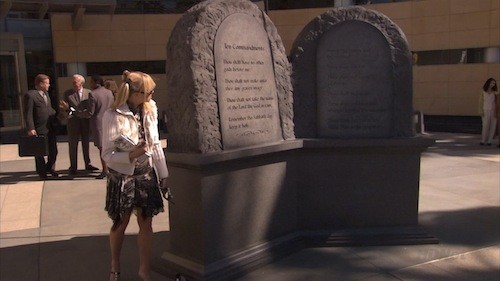
“It’s not like there’s some list of rules handed down to us from on high.”

At this point I can’t tell if I’ve proven that Mitch Hurwitz was definitely inspired by The Brothers Karamazov, or if I’ve “proven” it the same way your crazy uncle can prove that the Denver Airport is ground zero for the worldwide lizard-people conspiracy. Certainly I wouldn’t want to ruin a good joke by taking it too seriously. But if AD is an updated version of TBK, then it’s worth asking what updates Hurwitz thought necessary in order to bring the story up to date, apart from the set dressing.

Dostoevsky’s intention with The Brothers Karamazov was to persuade Russians that their instinctive love of God was a great resource, and it would bring them true happiness if they would only stop enslaving themselves to reason or sensual pleasure. In the thematic map of AD, love of family replaces love of God as the thing that every keeps gesturing toward and no one quite achieves, but unlike Dostoevsky, Hurwitz doesn’t let anybody get redeemed in the end. Maybe that means he doesn’t think love is powerful enough to redeem a fallen mankind anymore, which would be a depressing assessment of our age relative to Dostoevsky’s. Or maybe it just means Hurwitz is saving the tragic but uplifting conclusion for season 4. “On the next Arrested Development: George Senior gets murdered, Michael goes insane, G.O.B. finds God, and Buster starts a revolution.” I would watch those Netflix episodes.

29 Comments

    Ryan M.
    January 16th, 2013 | 5:43 pm

    Brilliant comparison! (Although, I would argue that Kitty has more in common with Grushenka…)

    Jessica Lamb
    January 16th, 2013 | 5:46 pm

    This is glorious. I wrote my capstone paper for my lit major on TBK, and I’m a huge fan of AD. Most of the comparisons line up brilliantly, though I think Buster makes a lousy Alyosha (unless the saint is read as an idiot) and Lucille 2 is a stretch for Lise. The defining characteristic for Lise is a sort of slide into wild, sadistic/self-destructive impulses, not mobility issues. George, Sr. is of course a fantastic Papa K, though. And Kitty as Katya makes me grin.

    A Cold Winter’s Blogging… | The Back of the World
    January 16th, 2013 | 6:00 pm

    [...] “First Things” First: you’re going to have to be as big of a nerd as I am to appreciate this, but the magazine “First Things” has an incredibly interesting article comparing the brilliant-but-short-lived TV show Arrested Development with my all-time favorite novel, “The Brothers Karamazov”. Check it out here.  [...]

    Julie
    January 16th, 2013 | 8:52 pm

    Just want to say, I enjoyed your comparison.

    Tim
    January 16th, 2013 | 9:53 pm

    This is basically the best academic discovery I’ve read in my lifetime.

    Timmy F
    January 16th, 2013 | 10:31 pm

    That was a really fun read.

    G.O.B. came delightfully close to finding God in the third season when he started dating Ann.

    ice.
    January 16th, 2013 | 11:32 pm

    half way through this article i wanted to start netflix.

    a+

    Tom
    January 17th, 2013 | 2:49 am

    BLOWN AWAY!!! Someone needs to ask Mitch Hurwitz if this is the case!!!

    julian
    January 17th, 2013 | 7:00 am

    Ms. Rittelmeyer,
    All of nerdom simultaneously rises to salute and pay you homage!!! Sheer Brilliance.

    Peter
    January 17th, 2013 | 4:59 pm

    The Brothers K is my favorite book. Awesome read! Is there a scene that’s the equivalent of Mitya pulling that guy around by the beard?

    Definitely 100% True « Gerry Canavan
    January 17th, 2013 | 9:27 pm

    [...] Arrested Development is The Brothers Karamazov. [...]

    Helen Rittelmeyer’s New Blog » First Thoughts | A First Things Blog
    January 18th, 2013 | 9:37 am

    [...] latest addition to our online lineup. She’s started with an uncanny side-by-side reading of The Brothers Karamazov and “Arrested Development,” a critique of David Brooks’ humility syllabus, comments on Nigerian soccer, and advice to [...]

    dedc79
    January 18th, 2013 | 10:11 am

    Surprised you left out the father. Granted, in AD, he ends up not having been killed, but there’s the continual question as to which family member is to blame for what’s happened to him.

    Andie
    January 18th, 2013 | 10:27 am

    I love Arrested Development. I also have a copy of the Brothers Karamazov kicking around. This article may be the push I need to finally getting around to reading it.

    My only question.. What of Lindsay?

    Quin
    January 18th, 2013 | 10:46 am

    Much like the interpretation of “The Shawshank Redemption” as a retelling of the life of Christ (the screenwriter/director seems to deny that he intended to fashion such a retelling), this interpretation of AD seems like plausible at a high level, as long as one doesn’t expect exact re-presentations of the characters or events from TBK.

    Asher Gelzer-Govatos
    January 18th, 2013 | 10:51 am

    This might be the greatest thing I have ever read. Spot on perfect.

    Mitch
    January 18th, 2013 | 12:57 pm

    You should change your link to say “a degree in English and theology from Georgetown,” since that is both true and supports your thesis

    Michael
    January 18th, 2013 | 2:41 pm

    Interesting parallels between the two! And a great introduction, although your reference here is from Tolstoy’s Anna Karenina rather than Dostoevsky…

    Another Week Ends: Mati Te’o, More Humblebragging, Russian Arrested Development, Pauline Economists, Pentecostal Megan Fox, | Mockingbird
    January 18th, 2013 | 3:10 pm

    [...] the culture front, First Things has discovered that “Arrested Development Is The Brothers Karamazov” in the most brilliant Christianity and pop culture article I’ve read in a long time. We [...]

    brinsonian
    January 18th, 2013 | 6:45 pm

    Not quite as high-minded, but there is also a lot of good talk about the Bluths vs. the Corleones.

    Does this make AD some sort of ur-tale for understanding “family” in the last 140 years? Yes. Yes, it does.

    Dannyv
    January 19th, 2013 | 4:53 am

    Excellent. Supposedly, Netflix is going to be producing a fourth season of Arrested Development so maybe we’ll be able to find out if the comparison holdsq up.

    PB
    January 19th, 2013 | 1:26 pm

    Haha! I just finished reading TBK last night, and spent the day hopping around in imitation of the various Bluth chicken-dances… finding this post was very timely!! It’s fantastic :D

    Although I too am curious to know — what of Lindsay? And think perhaps Grushenka is quite like Kitty, too, pre-reformation.

    Great stuff!

    Roger
    January 20th, 2013 | 5:40 pm

    ‘Once you realize that Annyong is Smerdyakov, everything else falls into place’ is a truly great line.

    Quid plura? | “With a wintry, storm-blown sigh…”
    January 21st, 2013 | 4:49 am

    [...] Is the TV show Arrested Development actually The Brothers Karamazov? [...]

    Darren
    January 31st, 2013 | 5:55 am

    This is the greatest article in the history of articles.

    It’s… A Russian Development | The Jesuit Post
    February 7th, 2013 | 12:37 am

    [...] her blog over at First Things… or actually because of one particular blog post where she masterfully compared Arrested Development to the Russian novel to end all Russian novels - The Brothers Karamazov… O. M. [...]

    Power Hour
    March 26th, 2013 | 2:57 am

    I doubt the similarities here are conscious. Hurwitz simply managed to capture characters and relationships that have a fascinating and hilarious dynamic together just as the original author did. The plots and characters of the classic Greek theater genres have been replicated thousands of times in modern film and this no news. Ever notice that Star Wars and Harry Potter have striking similarities? It’s because they follow the same Greek epic plot. All comedies tend to end with a back-handed happy ending, scary movies always end negatively, and the protagonist always prevails in action movies. Now, all those movies aren’t necessarily copying the Greek classics, but they know what works which is why they end up in the same place. Its parallel evolution.

    Having said that, I could be completely wrong. Regardless, it still seems that Hurwitz deserves praise for coming to the similarly brilliant conclusions as Dostoevsky. I’d love to hear it from his own mouth whether the similarity is intentional.

    Nick
    April 1st, 2013 | 12:16 am

    amazing article loved reading it

    Ryan
    April 22nd, 2013 | 10:58 pm

    Funny, Jason Bateman has already said to expect a “more pathetic Michael” in the fourth season. There has also been a sneak peak of season four that involved GOB being crucified, as well as rumors of George Sr. getting killed off.


Leave a Comment

=