



At the end of the day, there are three, and only three, types of Democrat Leaders when it comes to the Constitution. There are first, Open Opponents of the Constitution, second, “So-to-Speak” Supporters of the Constitution, and third, Forthright Supporters of the Constitution.
By “Democrat Leaders” I refer most obviously to the politicians who run as Democrats and the officials that run the Party, but also to the de facto opinion leaders for Democrats, even the ones who prefer to identify themselves as liberals, progressives, or leftists.
We have far more of the second type of Democrat Leader today than of either the first or the third. For example, President Barack Obama is a leader of the second type. And while in this essay I call for more Democrat Leaders to become the third type, or to more clearly declare themselves as such, I must indicate up front that I judge the first type of Democrat Leader to be much less morally compromised in their practice of politics than the second, and less essentially corrosive to our basic political order.
Here I will outline the basic features of the three types, with subsequent posts fleshing them out.
Open Opponents of the Constitution
The attempts by Louis Seidman, a professor of con-law at Georgetown University, to explain why we need to “give up on the Constitution,” and the far-more intellectually serious attempts of the key Progressive-era opinion leader Herbert Croly, founding editor of The New Republic , to explain why we should seek to eventually move beyond it, primarily by means of an easier amendment process, are the best examples.
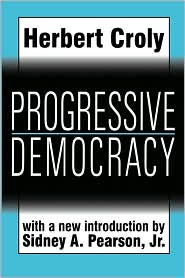
Open Opponents think the U.S. Constitution is an obstacle to our natural political development. It is insufficiently democratic, far too federalist, and impedes the employment of scientific management in policy areas where its use is needed. In many areas it makes us an embarrassing exception to the more typical liberal democratic practices seen in nations like Britain, Germany, France, and Canada, as certain Open Opponent political scientists like Robert Dahl never tire of pointing out. Its separation of powers lends itself to special-interest obstruction. The reverence it commands lends itself to demagogic scare-mongering and posturing. Yes, there are aspects of the Constitution that Open Opponents typically like and even idolize, such as most of the Bill of Rights, but overall, they want to amend, ignore, or otherwise get beyond large portions of the document. They detest the common reverence given its mere words as servile, cultish, and unschooled. Regardless of how various Open Opponents might differ on the specifics of what to junk from the Constitution, or how one goes about such junking, they all want to move America’s regime beyond the basic shape given it the Constitution, and to decisively rid Americans of their habit of reverencing its text.
So-to-Speak Supporters of the Constitution
These could be called Faux Supporters of the Constitution, for they believe just what the first set of Democrat Leaders do, or pretty large portions of it, but think that opposition to the Constitution has to be cloaked, mantled in a celebration of the Founders and a reverence for all things Constitution-evoking. Fundamental change of the constitutional order remains a basic goal, but it must only be obtained in a manner that the public can regard as consonant with the American political tradition, or, in a manner too subtle for the public to notice. The first and probably most effective practitioner of this strategy was Franklin D. Roosevelt, the president who tellingly built the DC monument to Jefferson, and claimed in his Commonwealth Club Address to seek an updating of his individualism to modern conditions. When FDR was introducing what he called the “Second Bill of Rights,” a list that included rights to “a decent home,” “a good education,” and to “earn enough to provide adequate food and clothing and recreation,” he said this:
[the first Bill of Rights’] . . . political rights . . . proved inadequate to assure equality in the pursuit of happiness. We have come to a clear realization of the fact that true individual freedom cannot exist without economic security and independence. . . . in our day these economic truths have become accepted as self-evident. We have accepted, so to speak , a second Bill of Rights under which a new basis of security and prosperity can be established for all. . . . (emphasis added)
So-to-speak Supporters of the Constitution sound like they are very much for the Constitution, but in fact they play fast and loose with it in their rhetoric in ways that mis-educate the public. Just as Obama did in his second inaugural, FDR conflates the words of the Declaration and Constitution. Such blending is poetically impressive, but it ultimately serves to convince Americans that both documents contain little but noble aspirations and “majestic generalities,” to use the words favored by the dean of living constitutionalist theory, Justice William Brennan. And it thus also serves to paper over the serious differences between the Founders’ basic vision of rights-securing government, and that assumed by many of the new programs being advocated.
Croly, and to large extent Woodrow Wilson also, admitted the differences openly, and said that while the Founders were great for their time, we’ve learned new lessons. FDR and Obama prefer to suggest that the Founders themselves would have expected us to expand, or build upon, their understandings of liberty, rights, and constitutionalism. If the spirit of that suggestion is marginally true for a few of the Founders, it is basically false. While Jefferson, for example, was a great believer in progress, and contrary to Madison wanted our constitutionalism to be more inviting of change and less demanding of public reverence, he had a definite theory of natural rights, and wound up making strict construction of at least the Federal Constitution a key dogma of the Democratic-Republican creed. He would have shook his head to have heard FDR’s “economic truths” described as “self-evident” in manner of the principles of the Declaration, and arched his brows at the half-suggestion that a Bill of Rights could be adopted by some So-to-Speak, outside the provisions of Article V, process.

Behind the scenes and their reverent rhetoric, So-to-Speak Supporters regularly work to alter the Constitution apart from using its own provided method of amendment. They take unconstitutional or only-dubiously-constitutional actions, particularly in the Executive branch and the bureaucracy. During periods of divided government, they try to make sure these actions are ones that are difficult or impossible to apply a “check or balance” to, and they generally seek (especially since FDR’s early tactical mistakes with respect to the National Recovery Administration) to make sure they are actions difficult or impossible to successfully challenge in court. The gradual, brick-by-brick effect of these actions establishes de facto alterations of the constitutional order which they can later claim were so-to-speak approved by the people.
Additionally, and particularly since FDR’s time, they have come to rely upon the Judicial Branch to legally alter the constitutional order by means of various novel theories of interpretation, the most fundamental of which is that of the living constitution. This has become their most important tool, and it results in our having to pack American Government 101 textbooks with references to Supreme Court decisions made since 1960, often with more of these than with references to the Constitution itself. None of these de facto nor jurisprudential alterations of the constitutional order are formally submitted to the people for their consideration.
So FDR’s speech did not really call for the “Second Bill of Rights” to be put into the Constitution. That might seem to make him more moderate, as he intended, but in certain respects it made his example to the Democratic Party even more dangerous to our constitutional order; I will flesh this out next time.
Forthright Supporters of the Constitution
In describing this class of Democratic Leader, I speak more of what is possible than of what there are many present-day examples of. In a nutshell, these are Democrat Leaders that the “conservative half” of our citizenry can trust to remain bound to the Constitution no matter what, and most especially, no matter what opportunities might present themselves to alter the actual constitutional order in ways seemingly advantageous to the progressive cause.
Forthright Supporters obviously will continue to have serious disagreements with conservatives if they are to remain Democrats. These will extend to the Constitution itself. But Forthright Supporters will nonetheless have the following traits:
1) They will understand and accept the basic arguments of the Federalist Papers and have a Lincoln-like respect for the Founding Fathers generally and the doctrine of natural rights specifically.
2) They will want the development of our Constitution to occur openly and with broad approval. To whatever extent they think that some major institutional change is necessary, they will call for these changes to take place by amendment, and only by amendment. (This might mean they also come to call for an amendment of the amendment process contained in Article V, to diminish somewhat the 2/3 and ¾ requirements. I would fine with that in principle, and you should be too.)
3) They will not suggest that it is only the Supreme Court’s duty to assess the constitutionality of a law.
4) When in executive or administrative office, they will shy away from acts of questionable constitutionality, and will demand the same of all presidents, governors, and administrative heads, regardless of party.
5) They will affirm what I say to all my American politics classes: The constitutionality of a law, and the justice and/or wisdom of a law can be fundamentally distinct questions.
6) They will accept constitutional law as a meaningful discipline. Contrary to the examples set by the Bork hearings and Justice Brennan’s Georgetown speech(linked above), they will accept that originalism is a plausible approach to the discipline. They will likely think it is at bottom wrong, but they will not dismiss it out of hand, and they will agree that law schools that have no professors of it are doing a grave disservice to their students and to the nation. Put it this way: for Forthright Supporters originalism “is here, is queer,” but they will have “gotten themselves used to it.”
7) They will be careful with their rhetoric about constitutional matters, for example not conflating the Declaration and the Constitution. They will accept the inevitability of aspirational talk, such as that present in Obama’s or FDR’s speeches, but they will generally avoid describing the Constitution (beyond the Preamble) as aspirational. They will detest it when someone like Louis Seidman says that In his Constitution Day speech in 1937, Franklin D. Roosevelt professed devotion to the document, but as a statement of aspirations rather than obligations. Whatever their opinion about where FDR stood on that question—and one can defend that speech from at least those charges — they will insist that such an attitude towards the Constitution is not their own and is no longer an acceptable one for liberal public servants.
8) They will understand that given the deep and possibly growing culture war divisions, an agreed-upon allegiance to the Constitution is the ultimate glue holding the nation together. They will agree with LSU professor James Stoner that this wide agreement to abide by the Constitution cannot be maintained if judges interpret that constitution according to what only some hold to be its “fundamental principles,” such as in the way William Brennan suggested.
That is, they will agree with the following statement Stoner made in a talk presented to UVA’s Program on Constitutionalism and Democracy :
But freedom of conscience means that people can’t be forced, by virtue of their agreement to certain constitutional principles, to profess certain fundamental principles. American constitutionalism holds that it is possible for people to live together as loyal citizens of a common constitutional order even though they differ on fundamental things.
So that’s the vision. The big rub, of course, is that I do not see how one can remain a Democrat Leader of any sort if one feels that the Roe v. Wade decision is a bad interpretation that should be struck down. And make no mistake, it, along with the Griswold decision it was built upon, are among the most egregiously text-abusing/ignoring decisions in our history. The only position here I could fully respect would be one that said: I understand that it was an error of constitutional interpretation to find the contraception-and-abortion-guaranteeing right-to-privacy in the 14th amendment. However, I hold that such a right-to-privacy really is a natural right, and that we ought to formally affirm it as a constitutional right by passing an amendment. Meantime, I will support judges who uphold Roe, so long as they don’t try to extend the right-to-privacy into other areas.
In other words, Democrat Leaders who are Forthright Supporters will have to be either somewhat inconsistent in this area (and a few others), or somewhat muddled. I may say more later about this, about what a more consistent Roe-opposing but nonetheless pro-choice stance might consist of.
But the main point is that moderate and conservative Americans could trust Forthright Supporters to not appoint judges who would push constitutional evolution on all fronts, or to through any branch otherwise “steal” the development of the constitutional order. Democratic Forthright Supporters might even say that the “rights revolution” in constitutional law is largely completed , with a few changes here and there remaining, some of them corrections of the over-reach. On a more mundane level, Democratic Forthright Supporters would almost certainly be for gay marriage, but usually Jonathan Rauch-style, i.e., only via legislative victory . On perhaps the most explosive issue for the future, that of religious liberty, they would tread with particular care.
Is this really too much to ask? I suspect, without yet having done the textual spadework, that the basic stance I have described is pretty much the one Stevenson, JFK, LBJ, and Tip O’Neill held not so long ago, granting certain muddles and inconsistencies, and making allowances for different times. The biggest qualification is that I think some of those leaders were fooled by the So-to-Speak talk of many of their Democrat peers, and were thus never troubled by facing how far in principle they were prepared to alter the Constitution. The divide I have sketched never mattered to the political issues that most concerned them.
The divide is clearer today. We are in a time when FDR-style vagueness, whatever worthy goals it may have been used for in the past, is being used to distract decent Democrats from the fact that we have a pattern of Democrat Leadership that is on a direct collision course with 40% of the population.
Unless enough future Democrat Leaders learn to reassure their fellow Americans who vote for the other party that they really are Forthright Supporters of the Constitution, and not merely So-to-Speak ones, future Democrat-led governments really could, in certain situations, find themselves up against a trust gap that threatens civil disorder and dissolution. Such leaders can only reassure the 40% by picking certain fights within their own party or opinion circles. Until conservatives see Democrats who display a certain eagerness to denounce the likes of Louis Seidman, to distance themselves from the likes of Cass Sunstein, and to mock the “glittering generality” talk of today’s Obama the way Lincoln once did that of Rufus Choate (thereby entering that phrase into our lexicon ), they have little reason to think that Democrat Leaders really support the Constitution.
Moderates, fight! For the soul of the Democratic Party! Make of your moderation a real service, a real peace-making, and not a muddled mix that lazily casts a pox on both houses.


