

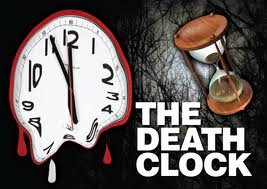
I find it odd that learned medical commentators would think that octogenarians and nonagenarians would not be aware that their time is growing short. Of course they do! Should doctors discuss what elderly patients want in terms of end of life treatment and extensive procedures should they become unable to decide matters for themselves? Of course they should, although those issues should be set out in an advanced directive–preferably a durable power of attorney for health care (or its equivalent)..
But somehow, why do I think that the push to discuss likely lifespan with the elderly who aren’t terminally ill is more about saving money in health care than promoting their individual well being? From “The Unspoken Diagnosis,” published in the pro health care rationing NYT:
Dr. Alexander K. Smith is a brave man. It has taken physicians a very long time to accept the need to level with patients and their families when they have terminal illnesses and death is near — and we know that many times those kinds of honest, exploratory conversations still don’t take place. Now Dr. Smith, a palliative care specialist at the University of California, San Francisco, who also practices at the San Francisco Veterans Affairs Medical Center, and two co-authors are urging another change, one they acknowledge would “radically alter” the way health care professionals communicate with their very old patients. In a recent article in The New England Journal of Medicine, they suggested offering to discuss “overall prognosis,” doctorspeak for probable life expectancy and the likelihood of death, with patients who don’t have terminal illnesses. The researchers favor broaching the subject with anyone who has a life expectancy of less than 10 years or has reached age 85.
Hold the phone! Patients should have their individual health situations discussed, to be sure. But tell a healthy 88-year-old (say) that they are going to die within a particular time based on statistics? No, particularly since the “prognosis” could well not be based on a false premise as to that individual.
The usual hedge in this regard is presented:
But while it’s true that no one can foretell a particular individual’s death with any certainty — and health care workers should be clear about those limitations, Dr. Smith emphasized — a number of geriatric calculators do provide reasonably good projections, based on several health factors, age, cognitive status and functional abilities and sometimes laboratory test results. An index developed by Dr. Smith’s U.C.S.F. colleague Sei Lee, for example, can correctly predict mortality within four years about 75 percent of the time.
Not good enough. Besides, that’s not how these things work in real life. Once such discussions became part of the checklist of to-do items, such discussions would often become blunt instruments–as we have discussed in other contexts–rather than nuanced conversations.
This proposal strikes me as being less about providing optimal care for the individual patient and more about transforming doctors into acting for the perceived overarching benefit of society by persuading older patients not to accept expensive interventions based on issues that may be irrelevant to their particular circumstances. This is the direction in which our would-be healthcare overseers want to take us.
But such a course would not only deprofessionalizes medicine, but also create a huge potential conflict of interest between doctors and their patients. Statistics are accurate, except when they aren’t.


December 30th, 2011 | 4:18 pm
Spot on, Wesley. It’s precisely the disregard for the patient’s _actual_, _individual_ health status and circumstances that make this a really dangerous path to tread.
In the midst of the original Oregon PAS debate, a study was cited (don’t have the ref handy; can look it up if you’re curious – circa 1995) that when doctors give a terminally ill patient a prognosis of 6 months or less to live, they can be wrong up to 40% of the time.
As you say, “Not good enough”.
December 30th, 2011 | 5:36 pm
My grandmother lived to be 83. My biological great grandfather lived to be 102, almost twenty years more then she did. You just don’t know. Moreover, if an elderly individual wishes to discuss their final wishes with his or her doctor, that is fine, but doctors shouldn’t be going around with an hourglass “helping” the elderly by shoving it in their face.
December 30th, 2011 | 7:00 pm
The data that Kathleen Lundquist refers to may be found in Christakis NA, Escarce JJ. Survival of Medicare patients after enrollment in hospice programs. N Engl J Med. 1996 Jul 18;335(3):172-8. To be admitted to a Medicare hospice program, not one but TWO physicians have to state that the patient’s life expectancy is less than 6 months. This study of over 6000 such patients found that 15% survived more than the predicted 6 months. In fact, 8% of them survived more than a year. The authors of the study did not report how many of these patients outlived their doctors.
For more details on the limits of prognostication, especially as it applies to physician-assisted suicide, see Chevlen E. The limits of prognostication. Duquesne Law Rev. 1996 Fall;35(1):337-54.
December 31st, 2011 | 2:12 pm
[...] Should Doctors Tell the Non Terminal Elderly When They Will Die? (Secondhand Smoke) [...]
January 1st, 2012 | 3:34 pm
While statistics and prognostics aren’t always accurate, they are, in my opinion, a necessary “risk” factor that should be disclosed to elderly patients who are being treated on an outpatient basis for cancer, heart disease, and kidney disease, etc..
You cannot deny (can you?) that AGE is a comorbidity factor in that all of the systems of the body have undergone some deterioration because of the long use of these systems. Dysphagia and aspiration pneumonia occur in the elderly population to a much greater extent than in younger patients (and is a leading cause of death) and is a risk factor that should be disclosed to elderly patients before they accept recommended outpatient care for their conditions.
But, of course, if physicians were required by law to get informed consent for “palliative care” and “curative” care, they would have to disclose the risk factors of outpatient treatment, etc.. to comply with current “informed consent” laws.
Informed consent would, of course, result in patients refusing certain “futile” outpatient treatment (self rationing) and would cut profits for the health-care industry. Obviously, this is why the MBA lobbied NOT to be put under the provisions of the PSDA in 1991.
If “known” risks of treatment had to be disclosed and discussed with the elderly patient, the patient, under current law, could disregard the risks and elect the “risky” treatment under the current law (the Age Discrimination Act) if this was their desire.
The “individual patient” is not now getting “optimal care” because of FISCAL Futility Concerns that the bioethicists ignore and fail to disclose to the public.
You fail to discuss that “Medicare has introduced a number of new payment ionitiatives that will have a profound effect on hospital reimbursement and quality and safety measures” and that “optimal care” for Medicare/Medicaid patients may really mean wide-spread unilateral passive euthanasia in defense of hospitals’ bottom lines.
How can you defend the current system?
January 2nd, 2012 | 9:36 pm
“But tell a healthy 88-year-old (say) that they are going to die within a particular time based on statistics? ”
Indeed, what would you say to the patient? “Based on statistics, you should already be dead.”
I once had a colleague who claimed that your remaining life expectancy was 100 minus your age, divided by 2. This is the Zeno model.
January 3rd, 2012 | 11:14 am
Oh Come On, Steve! Do you think the patient doesn’t know that “Based on statistics and life span, etc.. he/she should already be dead.”
The KNOWN statistics should be disclosed to the elderly OUTPATIENT who should be involved in the decision to accept or reject treatment OUTPATIENT treatment for serious life-threatening diseases. But, such discussions with elderly patients would cut profits, etc.. and put a burden on the physicians to seek “informed consent” for outpatient treatments that in turn might impact the profits of the providers if the patients, themselves, rationed the treatments.
Because the physicians and clinics were not put under the mandate to talk about “end of life” choices with those who statistically have shorter life expectancies, (the PSDA of 1991), the physicians can sell “HOPE” for profit when there really is no hope. Outpatient treatments often lead to inpatient treatment and increased expenses.
There would be “self-rationing” by elderly patients if physicians were mandated by law to get informed consent for “palliative” treatment and “curative” treatment. Informed consent would involve statistics and odds and risk factors of outpatient treatment.
Until the government and the bioethicists talk honestly about “palliative” treatment as a means of lowering the high costs of dying in the American hospital’s IC Units — and until they fully explain the benefits of dying out of the hospital and at home on palliative care — and stop the unilateral and illegal euthanasia of the elderly in the hospitals that is driven by reimbursement protocols, things will only get worse.
January 6th, 2012 | 10:29 am
[...] “Should Doctors Tell the Non Terminal Elderly When They Will Die?,” Wesley J. Smith, Secondhand Smoke [...]
Links
Blogs
Find Us
Contact