
Take my word for it: You don’t want to be around me at breakfast. I am not a chipper morning person, and it’s best to leave me to the coffee and the newspaper—and I mean newspaper, not the online edition—until I become fit for human company. There was, however, an exception to my congenital early-morning grumpiness, and it involved thirty-two years of Fridays. Because on Friday mornings, for more than three decades, my first semi-conscious thought was, “I wonder what Charles is writing about today?” The answer was rarely disappointing.
It’s been just over a year now since the illness that led to Charles Krauthammer’s death on June 21 disrupted Friday morning by removing his column from the op-ed page of the Washington Post. The encomia that followed Charles’s announcement that he was terminally ill, and that continued after his death, were appropriately full of praise for his courage and kindness. In my satchel of Krauthammer memories, the story that’s my personal favorite may cast some new light on this much-praised man.
It was October 18, 1999, a few weeks after the first volume of my John Paul II biography, Witness to Hope, was published, and the Ethics and Public Policy Center was hosting a book signing and reception. Things were a lot more civil in the nation’s capital in those days, and the party was attended by Democrats and Republicans, conservatives and liberals, politicos and pundits, Catholics, Protestants, Jews, and “None of the Above.” I thanked all those who had supported me during the two and a half years of preparation that had gone into the book, and then I began signing. The line was considerable and after about a half-hour I was surprised to find Charles approaching my table in his wheelchair, a book he’d just purchased in hand. “Oh, no,” I said. “You were on the review copy list; didn’t the publisher get you a copy?” “This isn’t for me,” he replied. “It’s for Daniel.”
Charles Krauthammer, a man who took intense pride in his Jewish heritage but had a complicated relationship with the God of Jews and Christians, wanted his son to know about Pope John Paul II. In detail. We were seventeen years into our friendship and I thought Charles had run out of ways to surprise me, but I was both surprised and deeply touched.
Everyone has Charles stories, and I’m no exception.
I remember being in his home and watching Russian grandmaster and human rights activist Gary Kasparov play three other chess whizzes at once on the Krauthammer kitchen table in timed matches—if memory serves, the others had thirty seconds to make a move and the great Kasparov had ten. I need not say who won.
I remember going to the last Opening Day at old Memorial Stadium in Baltimore with Charles in 1991 and spending the better part of four hours swapping baseball trivia with another kind of grandmaster.
I remember a seminar on the moral and legal questions of U.S. intervention in world affairs that I helped organize, in which Charles debated, in the most civil way, Fr. J. Bryan Hehir, the intellectual architect of the U.S. bishops’ 1983 letter on war and peace. It was an extraordinarily intelligent exchange of views, and at the end of the seminar, Jim Woolsey, a former Undersecretary of the Navy who would go on to become Director of the Central Intelligence Agency, exhaled with satisfaction and said, “That was major league.”
I remember bringing Charles some mementos of my first visit to one of the ancient synagogues of Krakow, where an ancestor of his had been chief rabbi, hundreds of years before.
And I remember Charles asking, two months after the implosion of the Soviet Union, “What are we going to do with the rest of our lives?” The great struggle in which we’d been comrades had been won; now what? I said that I didn’t think history was over, and that there would be a lot for each of us to do.
That was indeed the way things turned out. There was a lot to do. Charles did it with consummate skill for the next quarter-century. He now rests with the fathers, and I imagine Abraham is pleased to have his company, much as the rest of us miss him. Especially on Friday mornings.
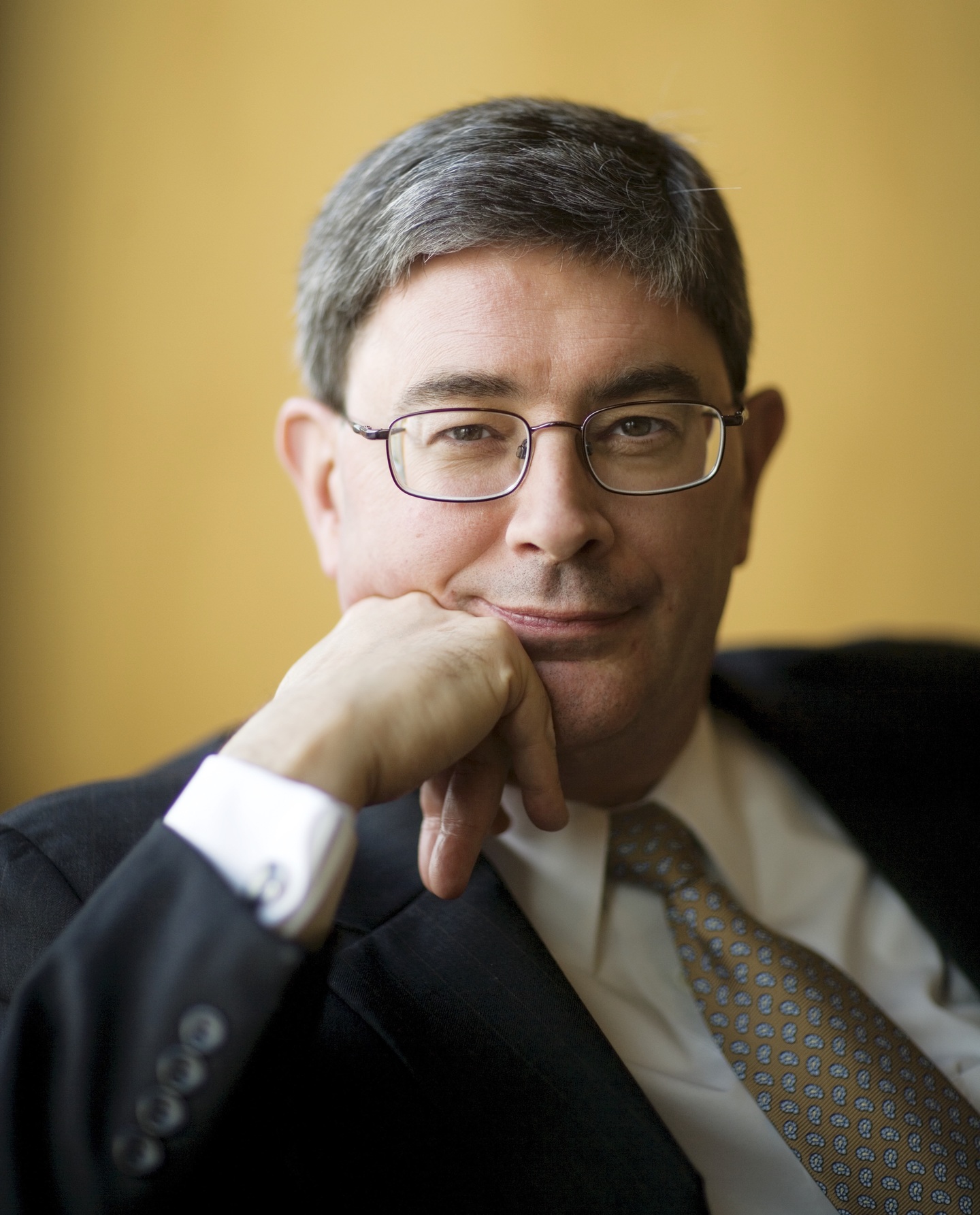
George Weigel is Distinguished Senior Fellow of Washington, D.C.’s Ethics and Public Policy Center, where he holds the William E. Simon Chair in Catholic Studies.
Become a fan of First Things on Facebook, subscribe to First Things via RSS, and follow First Things on Twitter.
Photo by Levan Ramishvili and in the public domain. Cropped from original.
Dear Reader,
Can I be direct with you?
War abroad. Socialists on the rise. AI upending human life. Endless uproar online. The modern attention economy doesn’t want readers — it wants users enslaved to the tyranny of the present.
First Things is the antidote: literary excellence, timeless truths, and a fixed point of reference in a culture that has lost its bearings.
But we can’t do it without readers like you.
Our goal: Raise $150,000 by November 1 to sustain First Things in the year ahead.
Your gift anchors readers in the permanent things.
Make your Fall Campaign gift now using the button below.
If you have any questions or would like more information, please contact Giovanni Del Piero, Director of the Editor’s Circle, at gdelpiero@firstthings.com or 212-627-1985.


YOU MIGHT ALSO LIKE
Forget Odysseus. Aeneas Is the True American Hero.
Who is our Odysseus? Or more precisely, who is the most Odyssean hero of American film? Matt…
Meet the Post-Religious Right
There have been many books written about the online right and the Trump movement, most by people…
Candace Owens and the Sin of Anti-Semitism
According to the online Encyclopedia Britannica, Sir Moses Montefiore (1784–1885) was “an Italian-born businessman who was noted…
